Architec- Tour: Ricardo Bofill and his Factory
After the death of the master of modernism the life didn’t stop. Let us present to you Ricardo Bofill Leví, a Catalan architect, who was born into a family of builders in 1939 in Barcelona. Maybe his name doesn’t sound familiar to you but if you ever have been in Barcelona I am sure that you have been visiting at least one building designed by him.
His name is connected with Barcelona Airport South Terminal or the emblematic Hotel Vela (W Building on the beach side), only highlighting two of his most known buildings.

But this time we have brought you another magnificent building of him. An old cement factory. Yes. Cement. Maybe you think of a building like this:
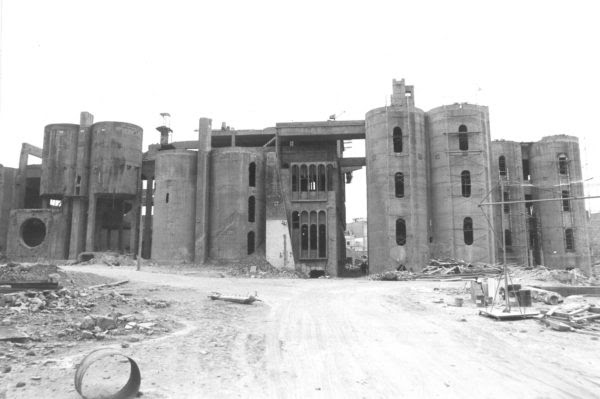
Bofill saw it like this:
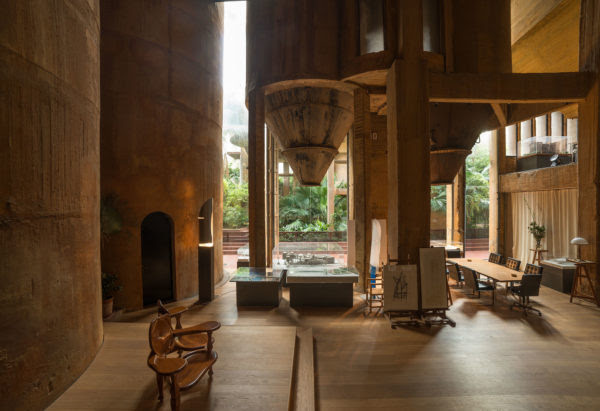
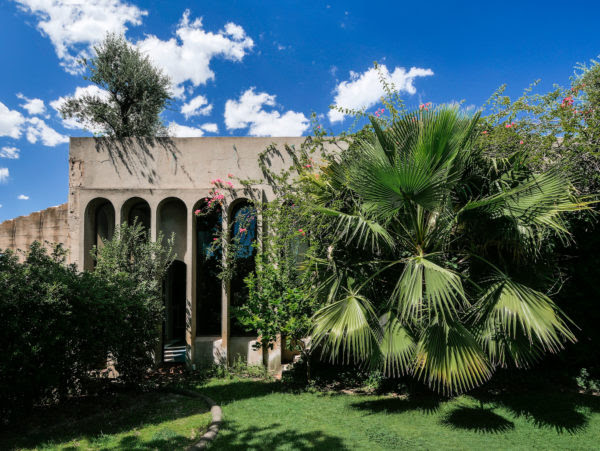
He says: “Presently I live and work here better than anywhere else. It is for me the only place where I can concentrate and associate ideas in the most abstract manner.
I have the impression of living in a precinct, in a closed universe which protects me from the outside and everyday life. The Cement Factory is a place of work par excellence. Life goes on here in a continuous sequence, with very little difference between work and leisure.
I have the impression of living in the same environment that propelled the Industrial Revolution in Catalonia.”
“The conversion of the abandoned cement factory from the late 19th century into RBTA’s studios and Ricardo Bofill’s personal residence, began with a process of destruction, demolishing pieces of the structures to reveal hidden forms. The factory lies directly next to Walden 7, in Sant Just Desvern, Spain.
The remaining eight silos were transformed into offices, a model making laboratory, archives, a library, a gigantic space known as “The Cathedral”, used for meetings, exhibitions, concerts, and professional activities of the architect. Above the Cathedral lies Ricardo’s residence, green roofs and terraces. The entire complex was planted with lush gardens to create the effect of an oasis within the industrial area.
The renovation project, which began in 1973, incorporates various architectural languages; Catalan Civic Gothic style and Surrealist elements and is an early example of European Post Modernism.”-https://en.wikipedia.org/wiki/Ricardo_Bofill
More info: http://www.ricardobofill.es/
Photos about the Factory: http://www.ricardobofill.es/
Photo Hotel W: https://pixabay.com/en/wella-barcelona-barceloneta-123915/